April 29, 2026
By Sarah-Jane Geldenhuys
I’m tired of watching women disappear into their own bodies.
My mom. My best friend’s mom. The women who raised me. They were all carrying something they couldn’t name. There was always this underlying hum of discomfort, of stress, of something not quite right. A nervous system constantly on edge. Hormones running the show while doctors wrote prescriptions, treated a symptom, and moved on.
I watched them fall through the cracks, into the space where medicine doesn’t look closely enough. And then, without realising it, I became one of them.
When you’re inside it, you start to see the pattern. This isn’t one woman’s story. It’s generational. It’s quiet. And it’s everywhere. That’s why I built Own Your Hormones.
In my twenties, I lived on coping mechanisms that were never meant to sustain a life. I masked so well that I lost track of where the mask ended and I began. On the surface, I was highly functioning, overly organised. Underneath, my body was trying to keep up with undiagnosed PCOS and AuDHD. Not separate issues, but one system pulling in different directions.
But the truth is, it didn’t start in my twenties.
I had severe anxiety from a young age. I couldn’t sleep. My gut didn’t function “normally”. My mind wouldn’t switch off. I had chronic headaches for as long as I can remember, every single day. At the time, it was treated as separate issues. Anxiety. Insomnia. Manage it and move on.
Only years later did I understand how common that pattern is for girls with AuDHD. Label it anxiety. Sometimes depression. Treat the symptom. Don’t ask what’s underneath.
No one joined the dots.
Always functioning. Never settled.
Looking back, my body was already under pressure. Always alert. Never settled. It just didn’t look like the version of AuDHD most people recognise. I wasn’t the child bouncing off the walls. I was the one overthinking everything, holding it all in, performing well, leading, achieving, and quietly coming undone in ways people could easily miss.
By the time I reached varsity, it was already fully in motion.
From the outside, I looked capable. Inside, I was running a marathon no one could see.
I carried tension in small, hidden ways. I picked at the skin around my nails and lips until I bled. I smoked. I found subtle ways to move the restlessness through my body, trying to regulate a system that never felt calm.
I was labelled the sensitive one. I cried easily and felt everything deeply. Injustice in the world, poverty, fractures in my family, a friend’s pain, it all landed heavily. My nervous system absorbed more than it could hold. Anxiety would arrive without warning, in ordinary places on ordinary days.
There were moments of relief. My best friend. Later, having my own room in a house share. But this was also when I withdrew the most. I skipped classes, spent entire days by myself, in bed, and struggled to keep up while everything inside me felt overwhelming. At the time, it didn’t feel like awareness or self-protection. It felt like there was simply too much of everything, and nowhere for it to go.
I was also a chronic people-pleaser. I apologised constantly. For existing. For having opinions. For taking up space. My friends would get frustrated with how often I said sorry, how much I bent myself to keep everyone else comfortable, while my own nervous system was quietly overwhelmed. I performed the “right” version of myself so well that no one saw how much I was struggling underneath.
Now I can see there was strength in how deeply I felt. But back then, I was just a girl who felt too much in a world that didn’t quite know what to do with that.
I carried on like that through varsity and my early twenties. Functioning. Coping. Pushing through.
When the cracks started to show
At 28, I moved to Cape Town. On paper, it was a new chapter. A fresh start. But internally, very little changed.
If anything, I became quieter.
I started isolating again, this time within my relationship. The world felt overwhelming in a way I couldn’t fully explain. Too much noise. Too many expectations. Too much unpredictability.
My home became the only place that felt manageable. The only place that felt safe.
The truth is, the world felt easier inside my four walls.
And underneath that, there was a deeper layer I didn’t yet have language for. A constant sense of being on edge in public spaces, around people, especially men. Not always conscious, but always present in my body. My nervous system scanning, bracing, preparing.
So I stayed where things felt contained. Controlled. Quiet.
By then, the cracks had widened. Trauma piled up, structure fell away, and my body stopped keeping up.
That’s when it became visible.
The weight gain. The skin issues. And my period started disappearing. One month, nothing. Then 46 days. Then 80. Even now, as I write this, I’m on day 92 with no period. My body no longer following any rhythm I can rely on.
It wasn’t just the absence of a cycle. It was everything that came with it. The mood swings. The fatigue that didn’t make sense. The cravings that felt physical, not emotional. The sense that my body was operating on a system I didn’t understand and couldn’t control.
At the same time, my focus is all over the place. I don’t always get to choose what my attention lands on. It feels like having tabs and tabs open in my brain, all at once. Or I lock into hyperfocus, with no in-between. I work for hours and forget to eat, then crash hard with intense sugar cravings. My body chasing dopamine while my hormones are completely unstable.
It isn’t new. It’s the same system, just no longer able to hide it.
And the anxiety didn’t go away. The headaches didn’t go away. I still live with both.
That’s the part people don’t talk about. You can push for years, until your body decides it’s done compensating.
I became another patient sitting in consulting rooms, trying to explain what was happening in my body. Each time, it was the same pattern. One symptom, one solution. Anxiety here. Sleep there. Skin. Weight. Irregular cycle. The pill. Not the pill. Next. No one stepped back to look at the full picture. No one asked how it all connected.
Then I found a doctor who did something simple, but rare. She listened. She didn’t rush. She tested properly and, more importantly, she connected the dots. My nervous system, my hormones, my trauma, AuDHD, PCOS. For the first time, someone saw me as one system, not a collection of problems.
For the first time, I made sense to myself.
But that kind of care came at a cost. I had to fight to afford it. And in that moment, something shifted for me. Not just in understanding my body, but in seeing how inaccessible that level of care really is.
Because nothing I was experiencing was separate. It never was.
When I was finally diagnosed with AuDHD and PCOS, it didn’t feel like something new. It felt like confirmation of what my body had been trying to communicate for years.
I’m not falling apart. I’m trying to function in a system that was never built for how I’m wired.
This is where everything changed
What still sits with me is the cost of not knowing. And I don’t just mean financially, although that alone is enough to shut most women out. Specialists are expensive. Testing is expensive. Integrated care is treated like a luxury.
But the deeper cost is what it takes from you over time. Years of being dismissed. Years of trying to fix symptoms without understanding the cause. Years of believing you are the problem, when no one has ever taken the time to explain how your hormones, your nervous system, your gut, and your lived experience all speak to each other.
And if it’s this hard for me, with access and education, then what does it look like for everyone else? For women in townships. For women working multiple jobs. For women whose doctors don’t have time or training to look at the full picture. Women whose cultural context gets completely erased in clinical settings. For women who will never be given the time, context, or care to be fully seen.
That’s when this stopped being just my story. It became something I couldn’t ignore.
I think about my mom often. She’s still in pain. Still in fight or flight. Still not being properly heard. My best friend’s mom, the same. And so many women I know are holding everything together on the outside while their bodies are running on survival mode.
We’re not broken. We’re being failed by a system that treats women like a list of symptoms instead of whole, complex human beings.
I’ve spent the last 15 years building spaces for women. I studied sociology and political science because I wanted to understand systems, not just symptoms. I’ve seen how trust is built, how information actually moves, and how real change happens within communities, not just consulting rooms.
What became clear to me is that women don’t need more clinical information thrown at them.
Why I built Own Your Hormones
We’re already overwhelmed by information. Advice everywhere. Contradicting, fragmented, often out of context. What we need is information that actually makes sense in our lives. Information that is accessible, culturally grounded, and connected to how we actually live. We need to understand how our bodies work before things reach crisis point, and we need to know that we’re not the problem.
Own Your Hormones exists because of that. Because women deserve more than survival.
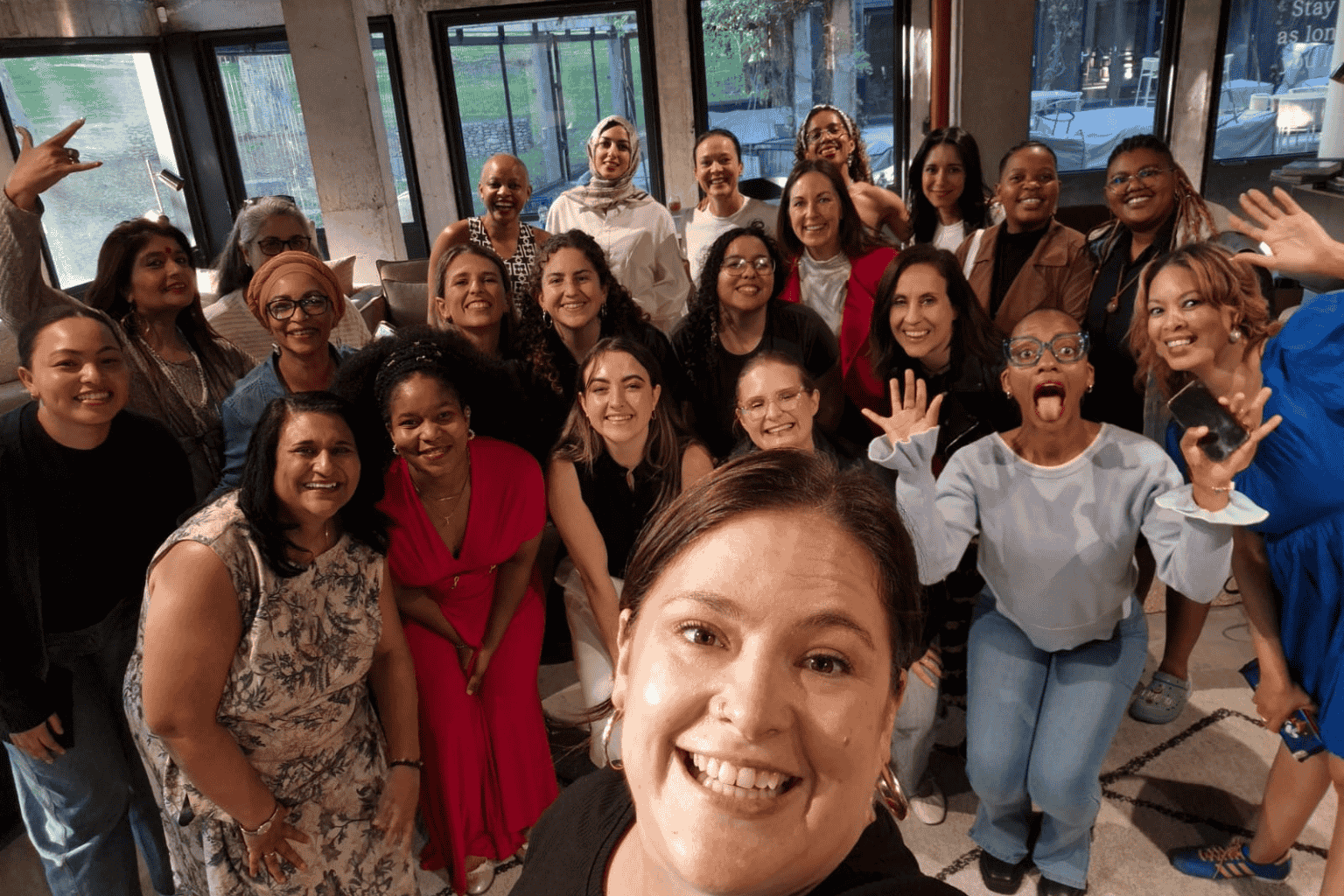
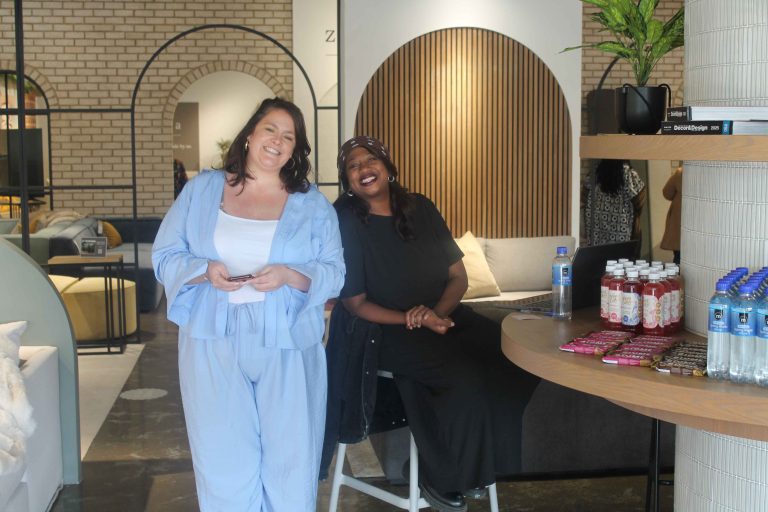
In 2025, we started testing this in practice – piloting hormone workshops and early research in Johannesburg and Cape Town to see if women were really looking for this kind of support. The same support I am still desperate for.
They were.
The need is real. And more than that, women are ready. Ready to understand their bodies in a deeper, more connected way.
It’s an intentional shift in how we approach women’s health. We’re bringing together practitioners who understand the full picture, from functional medicine and gynaecology to therapy, nutrition, and ancient African herbal support. Not isolated expertise, but integrated care that reflects how the body actually works.
We’re creating spaces where women can learn in real terms, through webinars focused on specific hormonal topics, and through community-led workshops in places where this kind of access has never existed. And on 28 November, we’re hosting South Africa’s first women’s hormonal health festival in Johannesburg. A space for women to learn, connect, and finally understand what’s happening in their own bodies.
Because this should not be a privilege.
I’m still unmasking. Still learning what is actually me and what I learnt to survive. This isn’t a story about being fixed.
It’s about realising I was never broken.
And neither are you.
Your hormones are running the show. You deserve to understand how.
And it should not cost you everything to get there.
About the Author, Sarah-Jane Geldenhuys
 Sarah-Jane Geldenhuys is a Cape Town–based founder and creator of Own Your Hormones. With over a decade of experience designing and building large-scale platforms and conferences, she has worked with leading corporates, senior executives, and solution providers across industries. Her work sits at the intersection of systems, culture, and lived experience, focused on making integrated, accessible women’s health education available across South Africa.