June 10, 2026
There is a kind of tiredness many women know intimately but, they just can’t seem to pinpoint what is happening to them or their bodies or even, what has changed.
This is not the tiredness that sleep fixes. This is the kind of tiredness that lingers in the body – in the womb, in the lower back and in the hips. The kind of tiredness that arrives before, during and after bleeding. The tiredness that makes a woman wonder if such pain and exhaustion are normal.
I have conversed (through consultations and friendly chats) with women who have crippling period pains, fibrosis [fibroids], ovarian cysts, blood clotting, infertility-related issues, breast tenderness and the deep, excessive fatigue that follows them month after month, leading them to feelings of almost perpetual dullness.
Some of these women have been told that their medical scans or blood sample tests were “fine,” whilst they could confidently feel that their bodies were not “fine”. Others were simply handed painkillers and told to come back if what they felt got worse or to a point, even unbearable.
In the contemporary times we live in, the Western narrative has a louder voice but, what does the African voice say?
African traditional medicine has long realised the epiphany that many modern women are only realising now: that the female body is not a machine. It is not an ever-ready robot. It is not an industrial production line.
The female body is holistically organic. It dances freely and passionately to the unscripted, rhythmic beats of life and, it sings in patterns too. It sings in the patterns of the moon phases.
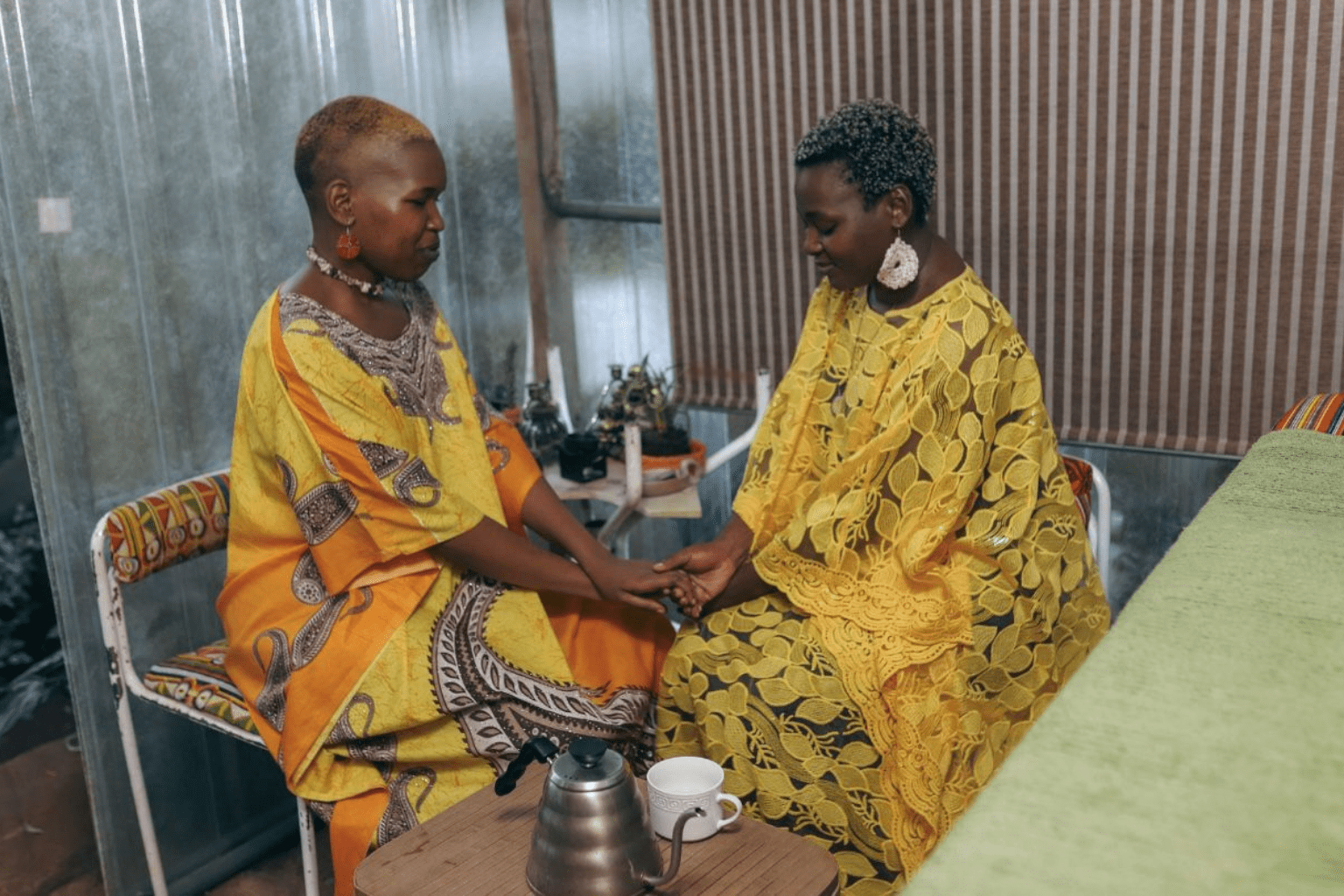
Long before monthly cycle-tracking apps, younger African women were taught from generation to generation by the wise women of the villages to observe their bodies closely and not only to observe the monthly flow of blood but, also the colour and odour of it. They were taught not only to observe the pain but, also where it was located! They were also taught to observe when the fatigue set in.
The womb was never treated as a separate part from the rest of the body. It has been long known that the womb was connected to digestive and appetite fluctuations and blood disorders. It’s been known that it could be impacted by stress, sleep health and most importantly, it’s been known that it had a profound connection with the spirit and that connection was held in high esteem.
One of the biggest failures in modern women’s health is how often the womb is treated in isolation. When a woman experiences painful periods, the focus is immediately set to her uterus. She develops fibroids, the focus is set to internal tissue growths. She experiences severe exhaustion; the focus is set to her iron levels. Yes, that is useful but, the general wellness focus that is implemented is incomplete.
Traditional African medicine has always asked a broader question: what else is the body trying to communicate?
In my space of work, that is often where the real story begins – long before the body finally screams due to years of overriding discomfort and emotional distress.
A painful menstrual cycle is rarely just a painful cycle. It is often the body signalling a depletion that could be due to poor nourishment (may be caused by inadequate dietary supplementation), poor fluid circulation (may be caused by inadequate physical/bodily movement) and low mineral count (may be caused by inadequate exposure to nature/natural elements). Chronic stress is also often a contributor to a painful menstrual cycle, as far as emotional distress is concerned.
Our ancestors may not have used the vocabulary nor the tools we use now but they understood the body’s patterns and language exceptionally well! They never labelled the mood shifts before a menstrual cycle as “mood swings”. Instead, they understood that certain phases of the lunar month required a diverse and creative approach. For example, through social interaction, they offered: warmth (physical and emotional), more rest and generally, more humane and social support. They well-understood the phenomenon of postpartum depletion! Interestingly, they also understood physical pain was not just pain – it not only contained information about the physical state of the body, but also that of the mind!
Key knowledge that was also shared by our ancestors was about what we alternatively refer to today as family planning; knowledge about the lunar menstrual cycle about when to try to conceive (fertile phase of menstrual cycle) and when to “be free” (infertile phase of menstrual cycle). But even more interestingly, they understood the concept of contraceptives and thus, developed natural ones which can still be used today. Inquisitively, one can ask:
What led them to even venture into trying to find such “a thing”?
Well, as the heading entails – they listened to communication pertaining to their appreciated (and respected) sensuality and thus, developed natural contraceptives so they could fulfil their bodies’ desires so, what modern life is doing is not a new idea but, an old one: preventing pregnancy without disconnecting from the body’s natural signals! Our ancestors knew that indigenous ways of life and health were never meant to be separate from normal daily life – that they were not reserved only for the ill.
Through women social gatherings (farming, ceremonial preparations etc.), it was taught that a woman’s cycle was not an inconvenience nor something to be embarrassed about. It was taught too, how to better the experience of a cycle through body steaming, timed rests, consuming herbal teas and broths, and using other forms of heat treatment.
It was through their wisdom that they considered all food and drink as medicinal partners of the body for, it was not just careless partaking in dining and drinking but, a conscious heed to the call of the body.
Through the same wisdom, we should ask: what of today’s modern/Western medicines?
Certainly, such wisdom does not warrant the rejection of modern medicine! The wisdom, though, warrants adaption – for through adaptions of land, region and space, traditional African medicine was cultivated!
In cultivating the answer to a question asked by traditional African medicine: what else is the body trying to communicate?
We must make room for both the contemporary medical scan and the ancestral ear to empathetically listen to the story. We must make room for both the contemporary blood contents test and the ancestral observation of the body’s patterns. We must make room for both the contemporary clinical care system and the ancestral, wholesome and all-inclusive living system.
A few other questions to consider in specifically dealing with women health are: when did the pain begin? What changed after birth? What does your bleeding look like? Are you resting? Are you nourished? Are you carrying stress in your body? What happens before the pain starts?
By exercising such, we can begin to answer the above questions (which are often the missing ones) – not only for women, but for all humanity.
Bringing African traditional wisdom back into the conversation is not a nostalgic fix. It is conveying more comprehensive communication for the female body; communication that reassures its intelligence, that honours its brilliance and also, communication that reminds us that pain is not a problem to be silenced, but a message to be understood.
So, before you disregard your body the next time it shifts, you need to acknowledge, accept and appreciate the shift. Track the timing. Notice the pattern. Ask better questions. Bring those observations to your doctor, practitioner or healer.
Your body has likely been speaking for a long time…It may be time we start listening.
About the Author, Nomfundo Madonsela

Nomfundo Madonsela an African Functional Medicinal Specialist and founder of Cured By LoMa , a wellness brand rooted in holistic, culturally grounding healing. My work bridges traditional herbal wisdom with modern wellness, using plant based care to restore balance and make wellness more intentional.